



Operations Analyst
Intelligently searches & synthesizes internal content to deliver accurate, context-aware answers & content.
The Challenge Today
Knowledge bases are notoriously hard to maintain. Articles are often created manually from incident resolutions, leading to slow documentation, inconsistent formatting, and missed opportunities. Over time, content becomes cluttered with outdated, duplicate, or conflicting information—eroding user trust and making knowledge harder to find. Without proactive upkeep, valuable insights remain hidden or unusable, slowing resolution times and increasing dependency on support teams.
What This Worker Uses:

Microsoft Outlook

Gmail
CRM

Salesforce

ServiceNow

Hubspot
ERP

IFS

Microsoft Dynamics
Collaboration

Slack

Microsoft Teams

Notion

Jira
Documents
IFS

Google Drive
Knowledge

Confluence

Guru

HelpDocs

Poka
How It Works
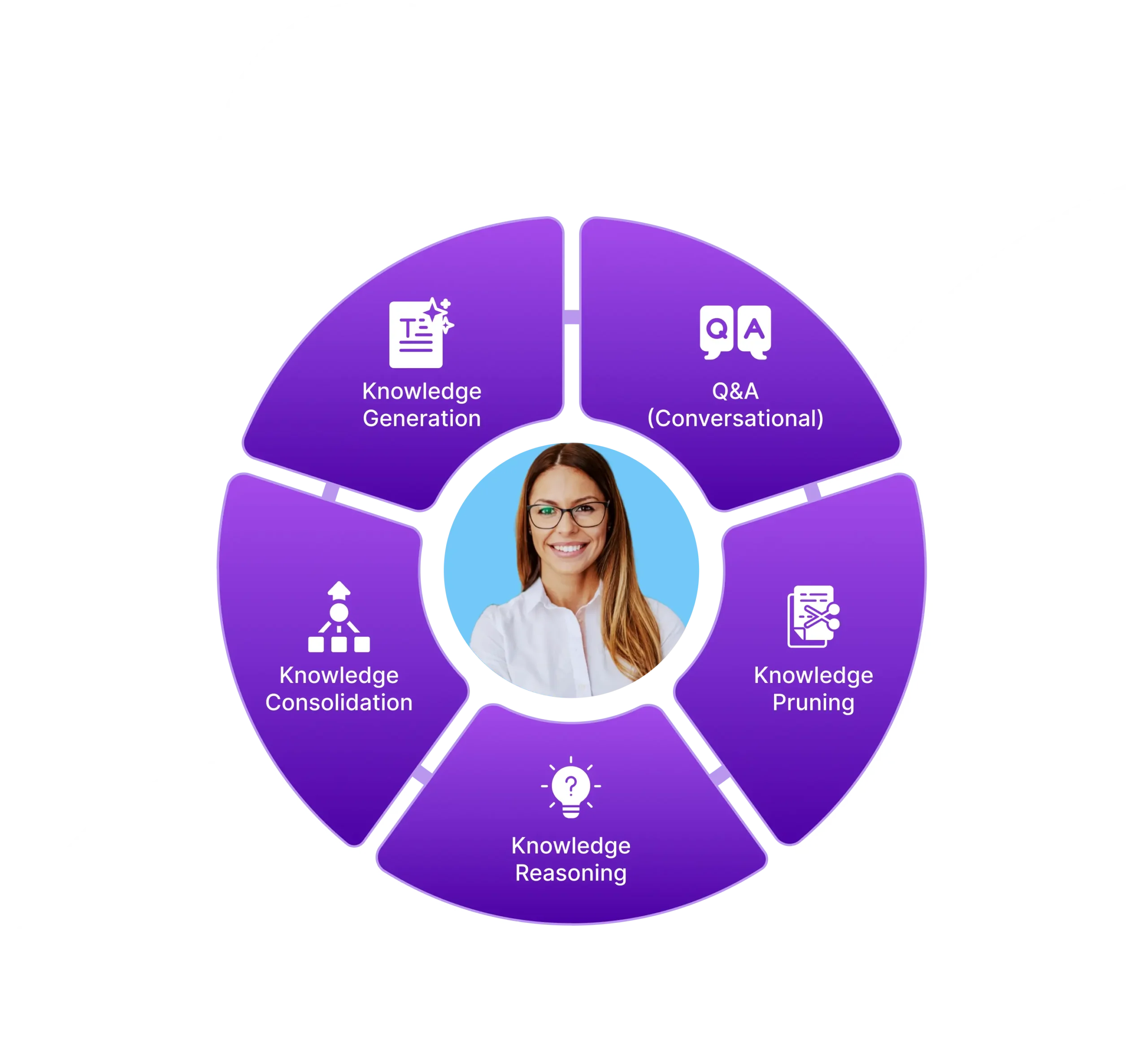
The Operations Analyst transforms reactive, manual content management into a proactive, AI-powered knowledge lifecycle—spanning generation, consolidation, and pruning. It turns fragmented, error-prone knowledge management into a self-improving system that keeps content useful, trustworthy, and always up to date.
-
 Generate articles: Automatically drafts articles from resolved incidents, aligned to templates.
 -
 Check for duplicates: Prevents redundant content creation by analyzing existing knowledge.
 -
 Apply standards: Ensures consistent formatting, metadata, and compliance across all articles.
 -
 Route for review: Assigns reviewers, tracks approvals, and integrates feedback.
 -
 Consolidate content: Detects overlaps and recommends merges for streamlined repositories.
 -
 Flag conflicts & outdated info: Identifies inaccuracies or deprecated guidance for correction.
 -
 Monitor usage: Tracks article views, ratings, and search success to assess relevance.
 -
 Prune stale content: Proposes archiving or retiring low-use, outdated, or redundant articles with full impact analysis.
Key Problems Solved

Eliminates slow, manual documentation from incidents.

Reduces duplicate and conflicting content.

Improves accuracy and freshness of knowledge articles.

Speeds up knowledge discovery and resolution times.

Builds user trust in the knowledge base as a reliable source.
Business Value and Impact
- Faster knowledge capture – Articles generated in minutes, not hours.
- Reduced admin costs – Less manual formatting, checking, and updating.
- Higher accuracy – Continuous validation ensures reliable content.
- Scalable – Works across IT, customer service, field ops, and more.
- Better experience – Improves self-service, training, and team productivity.
Why It Matters
The Operations Analyst keeps your knowledge base alive and trustworthy—capturing solutions as they happen, preventing clutter, and ensuring every user finds the right answer, fast.


